
Interview with Paul Herzberg, writer of The Moth
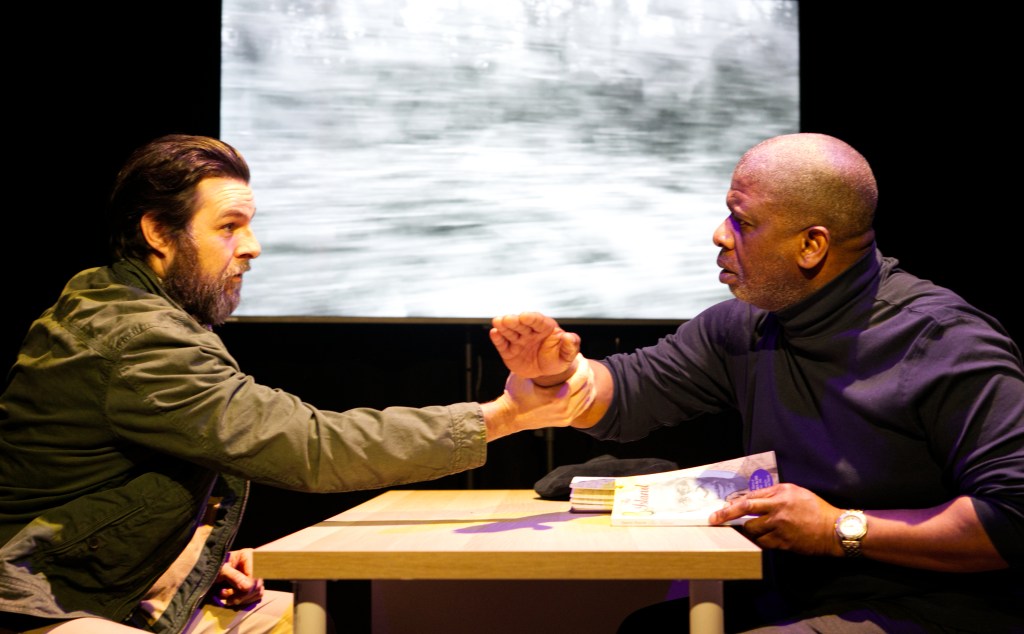
Playwright Paul Herzberg sat down with Lucy Smith to discuss the upcoming production of The Moth at the Finborough Theatre. Read their fascinating discussion below:
Why did you choose to write The Moth?
Jake Murray of Elysium Theatre approached me five years ago and asked if I had any monologues suitable for a YouTube for a project he was working on. I’d already written three scripts about the military experience in South Africa, exploring different aspects of conscription and war. I thought I’d exhausted the subject but there was one unaddressed anecdote I recalled with great clarity after talking to Marius Van Niekerk, an Angolan war veteran, who had helped with research: a haunting story about a young, traumatised white recruit ordered to stand guard over his black freedom fighter captive, how the suffering of the man was affecting him, and the terrible choice he made. This was The Moth, which went out as part of the COVID-19 Monologues for Elysium on YouTube. We were staggered at its success, the many film festivals for which it was selected, and immensely proud of the Kwanzaa Film Festival New York award for best monologue it won. Many people expressed the desire to see it adapted for the stage, so I went ahead, working once again with Jake as dramaturg.
Of course, the moth itself is a key symbol. Why did you choose this, and what significance does it hold in the play?
The consequences of certain choices are inescapable. When those choices are made under extreme circumstances, in this case a brutal war, I wanted to find a way to manifest the guilt and torment soldiers can face when they have taken a life — and taken it in the case of the play, simply to blunt the horror of the moment. Without giving too much away, let’s just say the “fluttering of tiny wings” that plague the killer is an eternal reminder of the terrible choice he made as a young conscript.
Could you give an insight into your writing process, and what it was like expanding from a 10-minute monologue into a full-length play?
One of the things that struck me in the reaction to the YouTube monologue was how people felt it was almost like hearing a ghost story that never leaves you, one you are then compelled to tell others. By bringing the killer into the story, we are able to explore the central issues of the play more deeply: the nature of forgiveness being central: what, in reality is it?; who has the right, if anyone, to give it?; does it help with the process of reconciliation or is it avoiding true justice? Where there was one story being told, there are now two parallel lives we are exploring — one man desperately seeking forgiveness, another, determined to withhold it because of his past and ideals.
Could you give an insight into the personal and wider importance of the themes of the play, especially in the cultural climate of today?
Growing up under Apartheid with activist parents gave me a deep sense of the injustice the country was facing. I have long been fascinated by the emotional and psychological factors that make people embrace racist ideas, and how easily manipulated and manoeuvred they can be. We are witnessing a terrible upsurge in xenophobia — on the one hand the civil rights movement and post-war consensus had a profound impact, creating more emancipated attitudes, but that seems to be changing with prejudice re-emerging and re-inventing itself, enhanced by the Wild West of the Internet. I cannot ignore that as a playwright.
Why did you choose to also focus in on PTSD and military trauma, and how did you go about translating this into the play?
The PTSD suffered by the soldier is incidental to the story rather than something on which I explicitly focus. But I was particularly touched when British ex-soldiers were moved by the play, having connected with it so strongly. The other character in the play, John Josana, the son of a renowned black activist, also, to some extent, suffers from PTSD given the terrible disruptions of his past and the ongoing racism and exclusion he faced as a boy growing up in South London. ut things, make you reconsider what think you know and what you don’t. Its there to challenge you and make you grow, and in our often complacent times that’s vitally important.
Bouncing off John’s line: ‘Don’t ask me to forgive you. I can never do that.’ Forgiveness, and the lack of, is crucial in John’s characterisation and his actions. What role does forgiveness play in the dynamic between the characters – despite the tentative understanding that develops, how far does their forgiveness reach?
Forgiveness is one part of the many powerful themes ‘The Moth’ engages with. Marius never formally asks for John’s forgiveness, but he does constantly seek some kind of closure, recognition, understanding or even acceptance through him. Once he has met John and the two have confronted each other Marius sees his redemption as being bound up in the other man. John can’t or won’t give it to him, but Marius doesn’t stop coming. The play asks big questions about whether any of this, forgiveness, redemption, whatever you want to call it, is possible, what it means, how it relates to responsibility and what value it has when the worst crimes have been committed. As with all great plays it doesn’t provide answers, but puts the questions in such a way that you feel you have to find your own.
Why did you choose to bring The Moth back? Both as a theatre company and as a director, why did you choose to expand its reach further into London, and what importance does it have to you that you chose to direct it again?
Paul wrote the original monologue during COVID in 2020 in the wake of the Black Lives Matter movement. Since then we have had the invasion of Ukraine, October 7 and the war in Gaza, the election of Trump, the Far Right riots of 2024 and the accelerating splintering of our society into increasingly polarised sectarian factions. We’ve had the Iran War and a growing threat of a wider war in Europe.
During all that Paul completed the stage version in 2024 and we performed it to great acclaim across the North in 2025. Every day its confrontation of the issues all these events have thrown up and its call for a universal humanity get more and more urgent and relevant. Why not bring it to London, the centre of all the debates raging in our country? The Moth deserves a greater audience and we can’t wait to see how London reacts to it.
Can you outline the importance the show has to you, and some of the key impacts you have taken away from it?
The Moth is one of the shows I am proudest to have done. I’m an old-fashioned humanist. I do believe there is a universal humanity and a better world to fight for. We live in a time when hate is back in fashion, when dividing lines of race, religion, nation and class are being drawn again and war violence are becoming celebrated as valid political acts. Paul’s play is a rallying cry for anyone willing to stand against that. Hatred and killing cannot be our future. The Moth shows where that leads and warns us against it. It is a refusal to surrender.
The Moth runs at the Finborough Theatre from 27 Oct – 21 Nov 2026. Presented by Andy Jordan Productions and Elysium Theatre Company in association with Neil McPherson for the Finborough Theatre. Buy your tickets from the Finborough website.

